



Direct views into the home
Entrance and street-facing glazing often needs privacy without turning a naturally bright hallway into a permanently dark one.
Hallways often have some of the most exposed or unusual windows in the home: entrance glazing, tall stairwell windows, narrow openings and shaped features. The right solution should give you useful privacy without needlessly taking away the daylight that makes the space feel open.

A front entrance, tall landing window and arched feature can all sit within the same part of the home but need very different solutions. Privacy, reach, shape and the amount of natural light worth preserving are the useful starting points.
Entrance and street-facing glazing often needs privacy without turning a naturally bright hallway into a permanently dark one.
Tall stairwell and landing windows need the operating method considered before anything is ordered.
If the shape gives the entrance character, the window treatment should work with it rather than hiding it.
Hallway windows are often visible from living spaces and landings, so finish and proportion matter beyond the entrance itself.
Choose the situation closest to your window. The suggestions narrow what is worth comparing while leaving the final specification to the actual opening, height and fitting conditions.
Entrance glazing often benefits from a product that limits direct views into the home while still allowing useful daylight into the hall.
A beautiful product is not useful if day-to-day adjustment is awkward. Height and access can make motorised operation especially valuable on suitable blind systems.
A bespoke treatment can follow the shape of the opening rather than placing a conventional rectangular covering in front of it.
Not every hallway needs a specialist product. On a conventional landing or hall window, a simple made-to-measure blind may be the strongest answer.
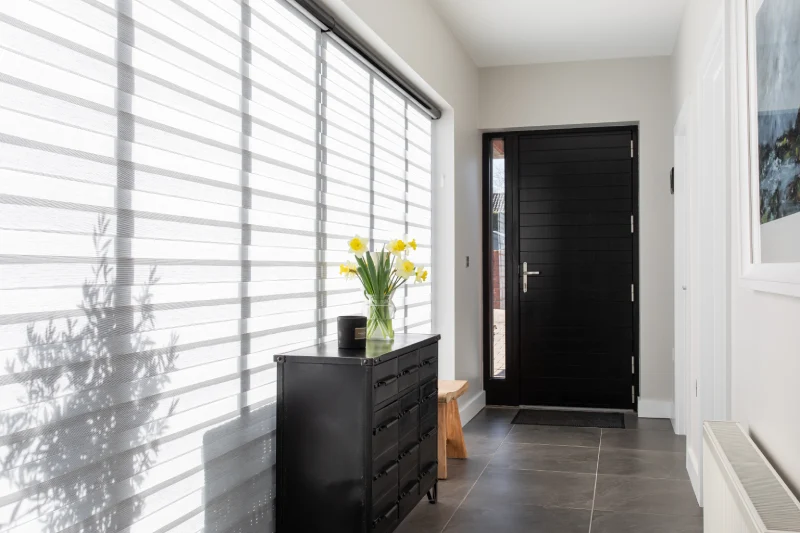
The entrance is often one of the easiest places to see into a home, but it is also where natural light can make the biggest difference to how open the space feels. Adjustable products let that balance change through the day.
Hallway windows are closely tied to architecture: the stair height, wall area, entrance door and view from adjoining rooms. Seeing the finished installation in context makes scale and daylight easier to judge.
Height and geometry are not minor details. They affect how the treatment looks, how it operates and whether the finished window still feels like part of the architecture.

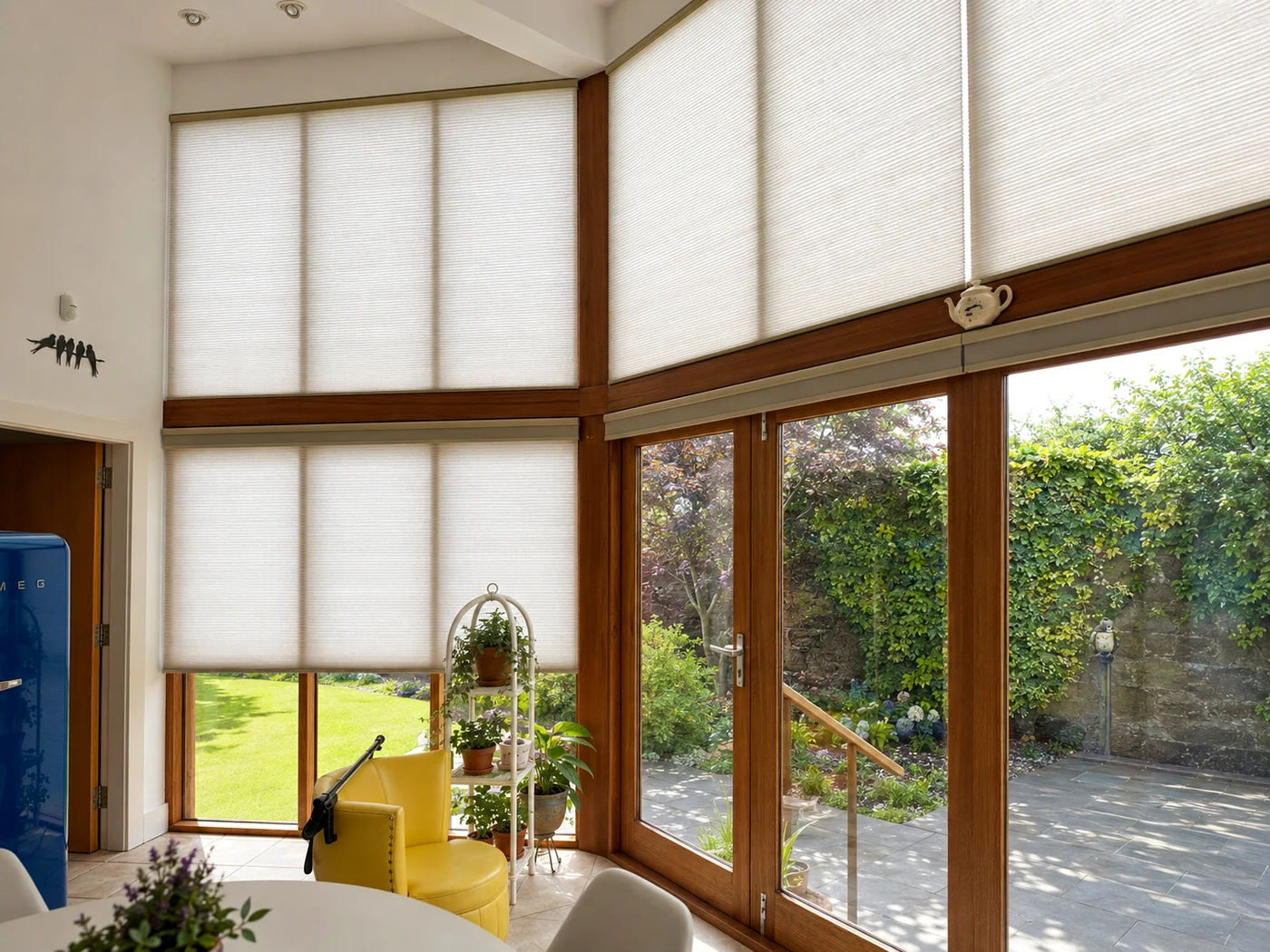
Tall windows can be a major feature of the home. The product should work with the full proportion of the opening while remaining practical to adjust.
Explore motorised options →
Bespoke shaped shutters can follow arches, apex windows and other unusual openings rather than obscuring them behind a rectangular covering.
Explore shaped shutters →You do not need to know whether you want a blind or shutter before we arrive. We can consider privacy, daylight, window height, access, shape and the view from adjoining rooms before narrowing the useful options.
We’ll look at entrance privacy, useful daylight, window height, access, unusual shapes and how the treatment will be operated, then show suitable options, professionally measure and provide a quotation for the specification you choose.
Choose blinds, plantation shutters, or compare both during the same hallway appointment.
This helps us allow the right amount of time for your home appointment.
You’ll continue to the live calendar to choose an available date. If you choose both blinds and shutters, your appointment will allow time to compare both.
Read recent feedback about the advice, communication, finished products and professional fitting before deciding whether Village Blinds and Shutters is right for your home.
Hallway windows vary enormously, so the best solution depends on the opening, its position and what you need it to do.
We’ll look at privacy, daylight, height, reach and shape, bring suitable samples, professionally measure the window and provide a quotation for the specification you choose.
A contemporary pleated blind that folds into compact cells, helping you manage daylight, privacy and comfort with a neat, minimal finish — professionally measured, made to your specification and fitted across Northern Ireland.
Cellular blinds — often called honeycomb blinds — are made from pleated material formed into a series of cells. Viewed from the room, the blind has a clean continuous face; viewed from the side, the honeycomb structure becomes clear.
That construction lets the blind retract into a relatively compact stack while also creating pockets of still air within the cells. The result is a very tidy product that works particularly well in contemporary interiors and larger areas of glazing.
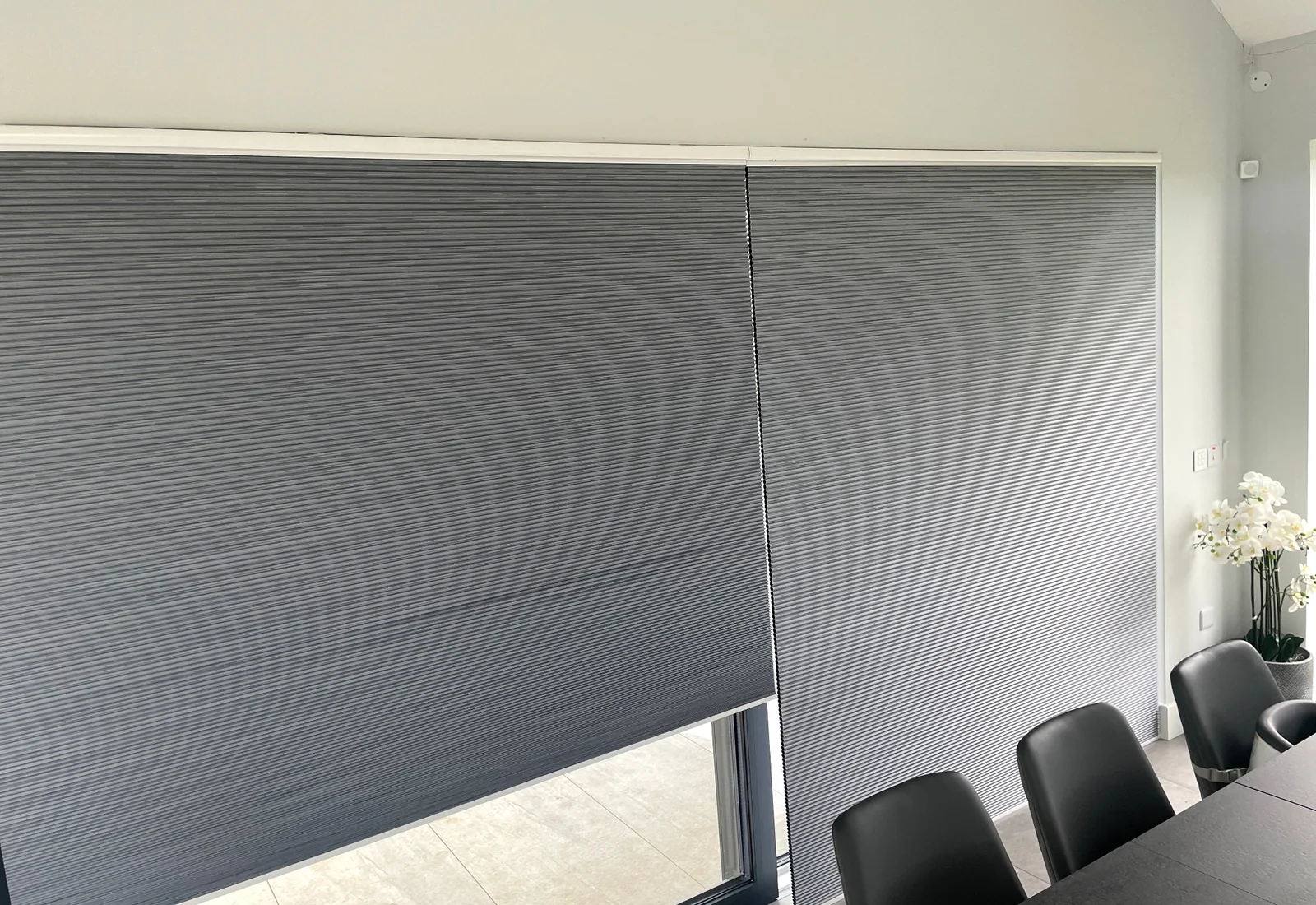
The cellular profile is more than a visual detail. It changes how the blind folds, how compactly it stacks and how it interacts with the air immediately beside the glazing.
The right cellular specification depends on daylight, privacy, window type and how often you want the blind to move.
Light-filtering cellular fabrics can diffuse bright daylight and give the window a calm, uniform finish while allowing the room to remain naturally lit.
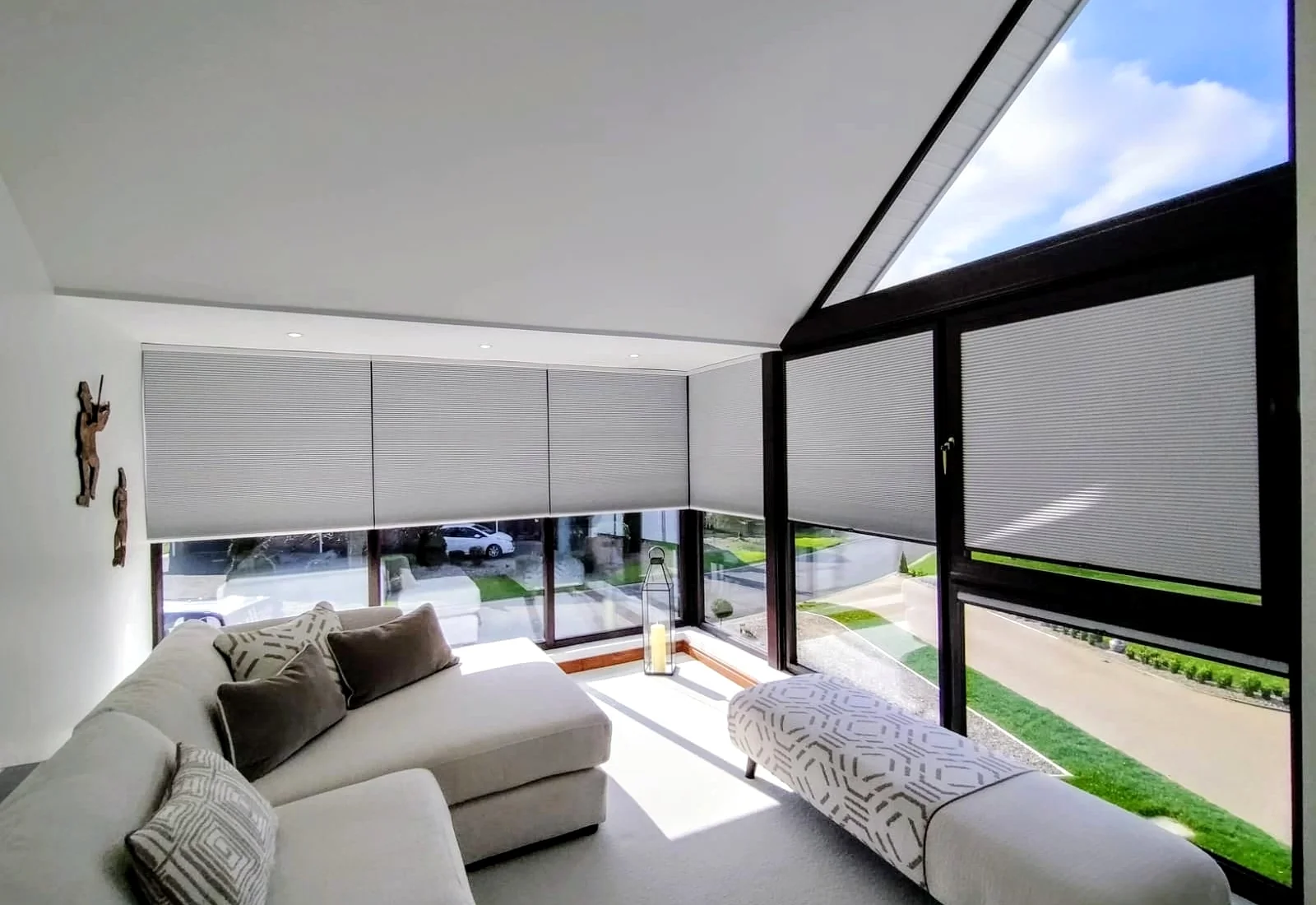
Selected cellular fabrics are designed for greater light reduction. They can be especially useful in bedrooms, media spaces and windows where direct sunlight needs more control.
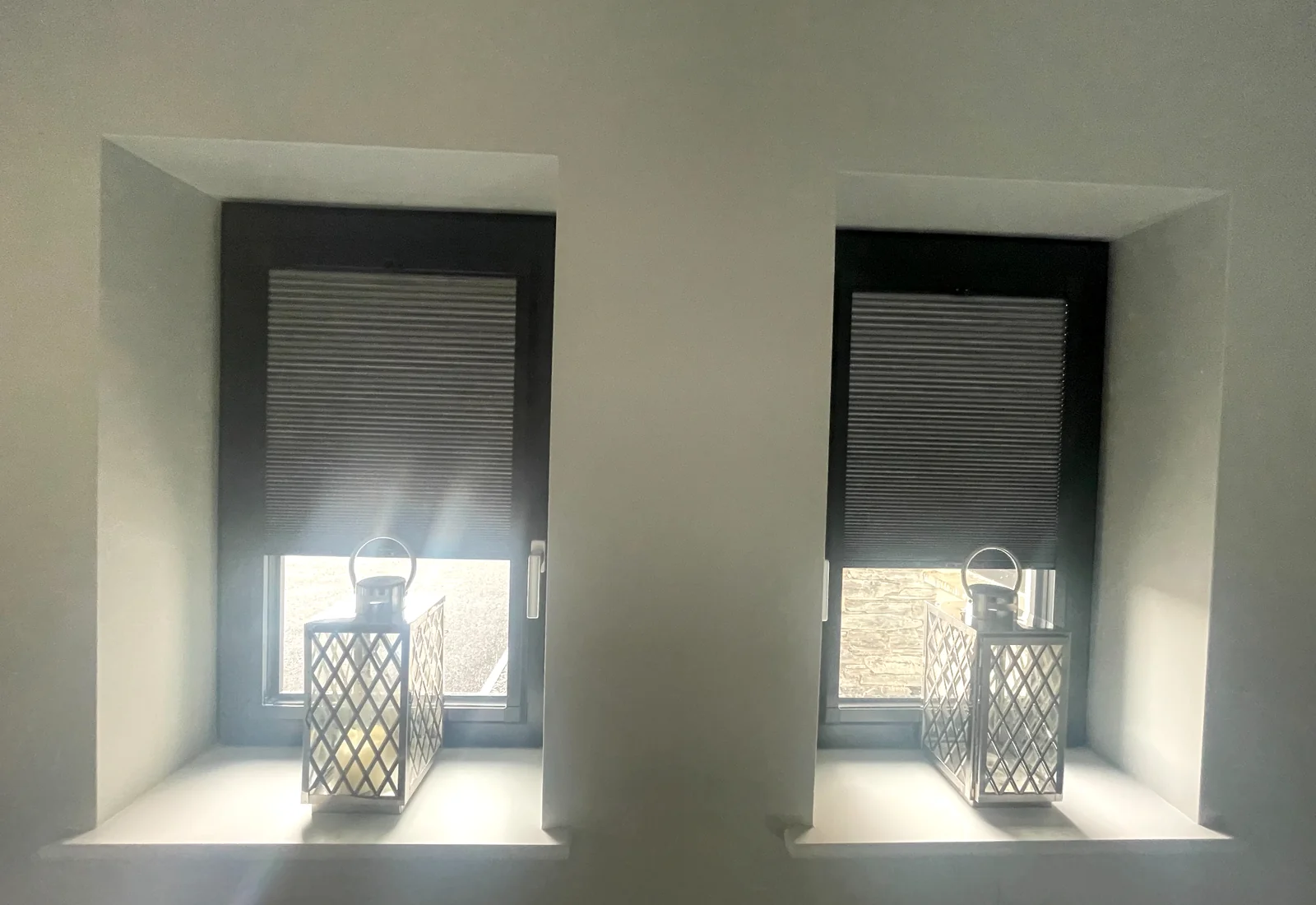
Depending on the selected system, cellular blinds can be specified for conventional windows, larger areas of glazing, selected door and Perfect Fit applications, roof windows and powered operation.
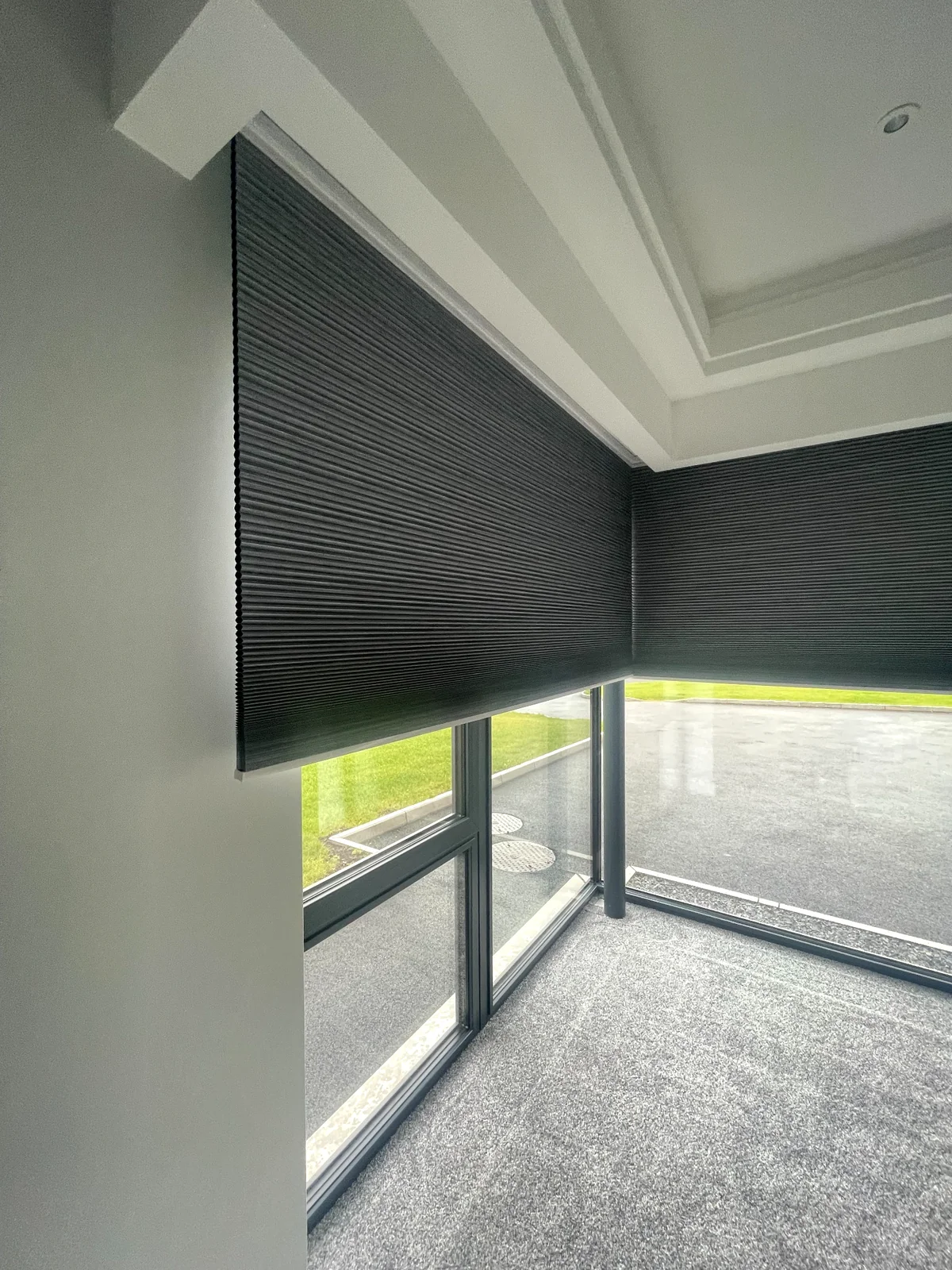
Cellular blinds are not only for standard windows. Their compact pleated construction makes them useful across a number of specialist applications.
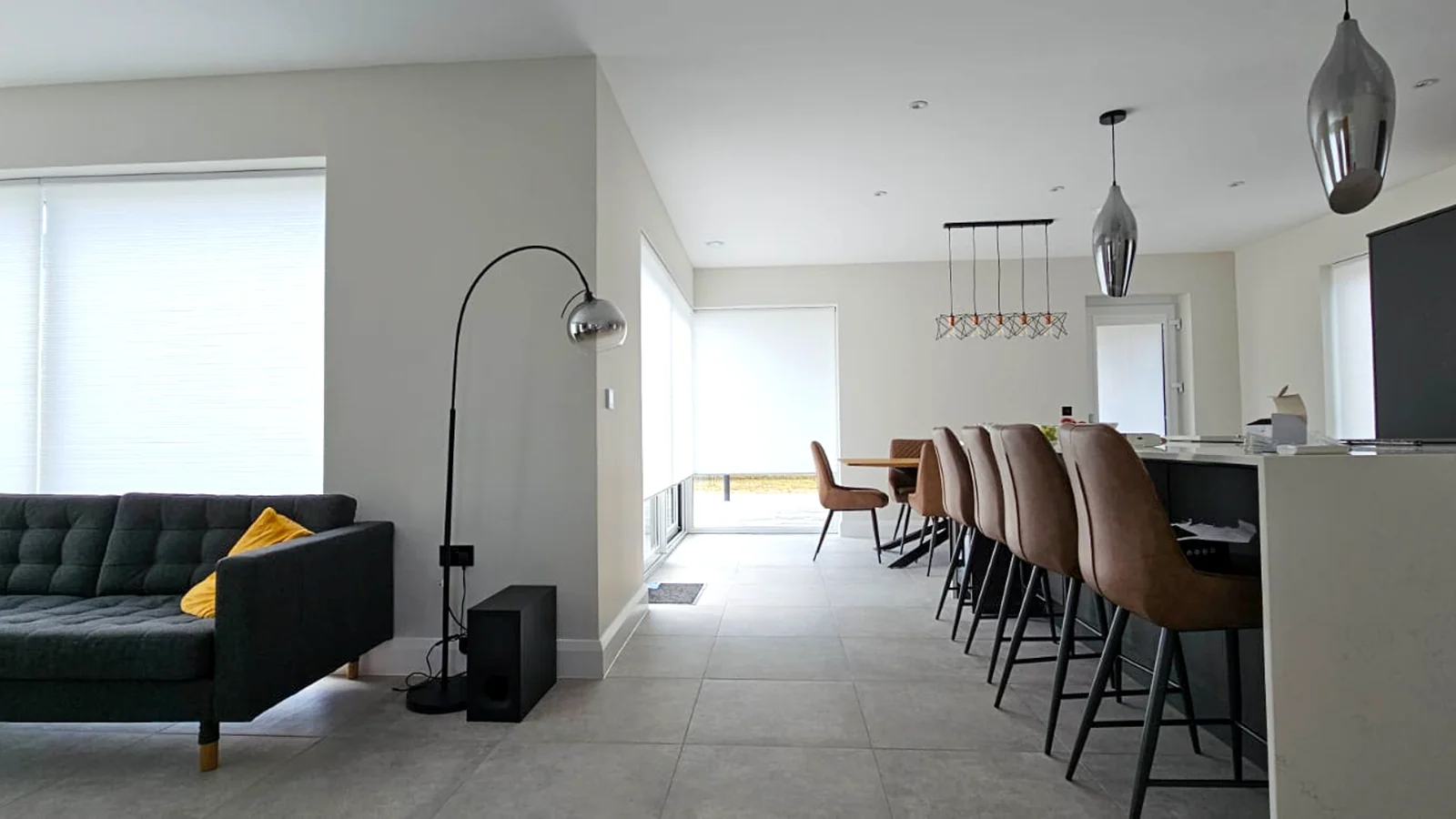
The restrained surface and compact stack can work well where the glazing already provides the main visual feature.
Planning a larger project →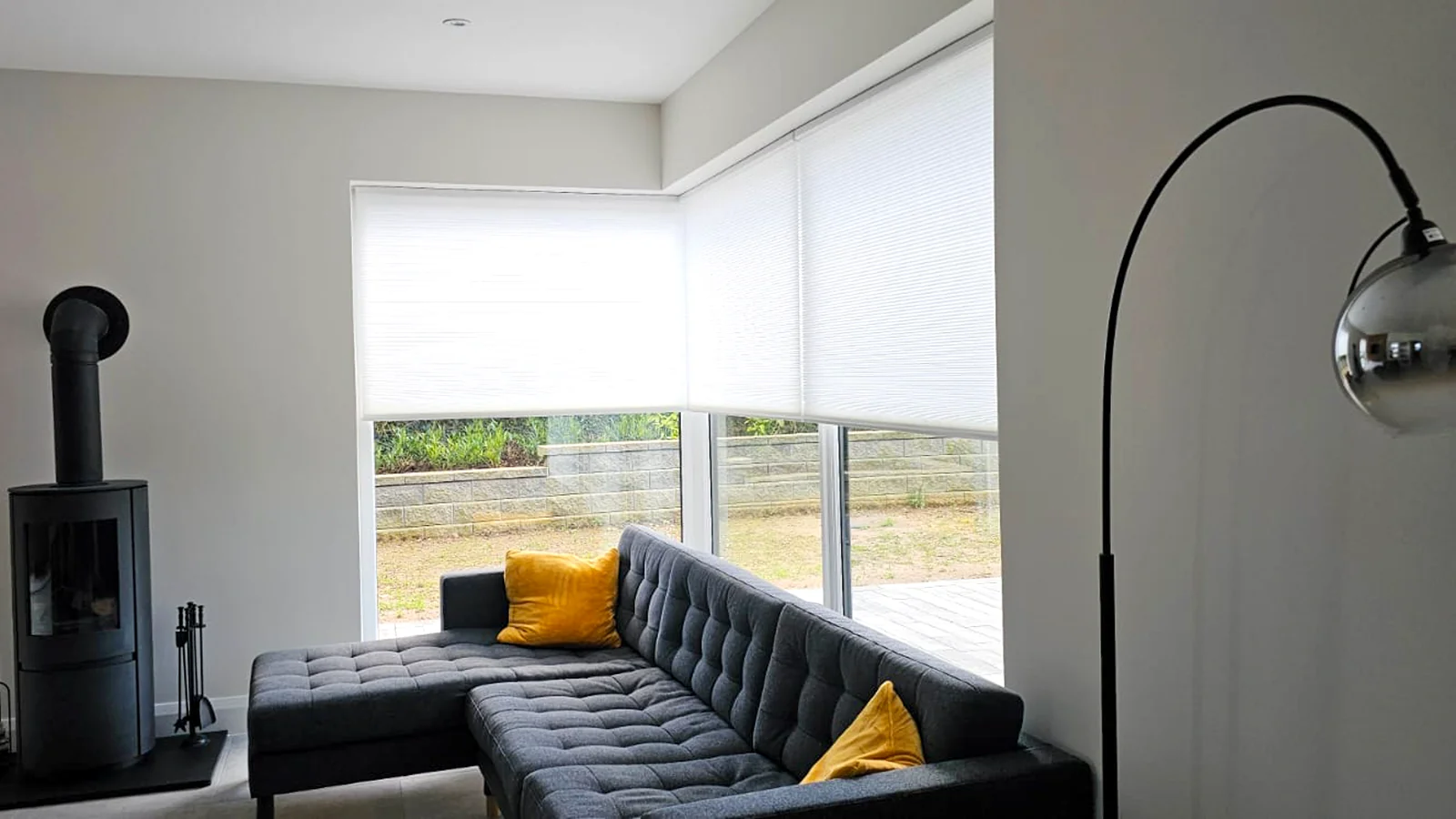
Useful when you want a clean backdrop to furniture rather than a blind with strong slats, patterns or hardware.
Living room options →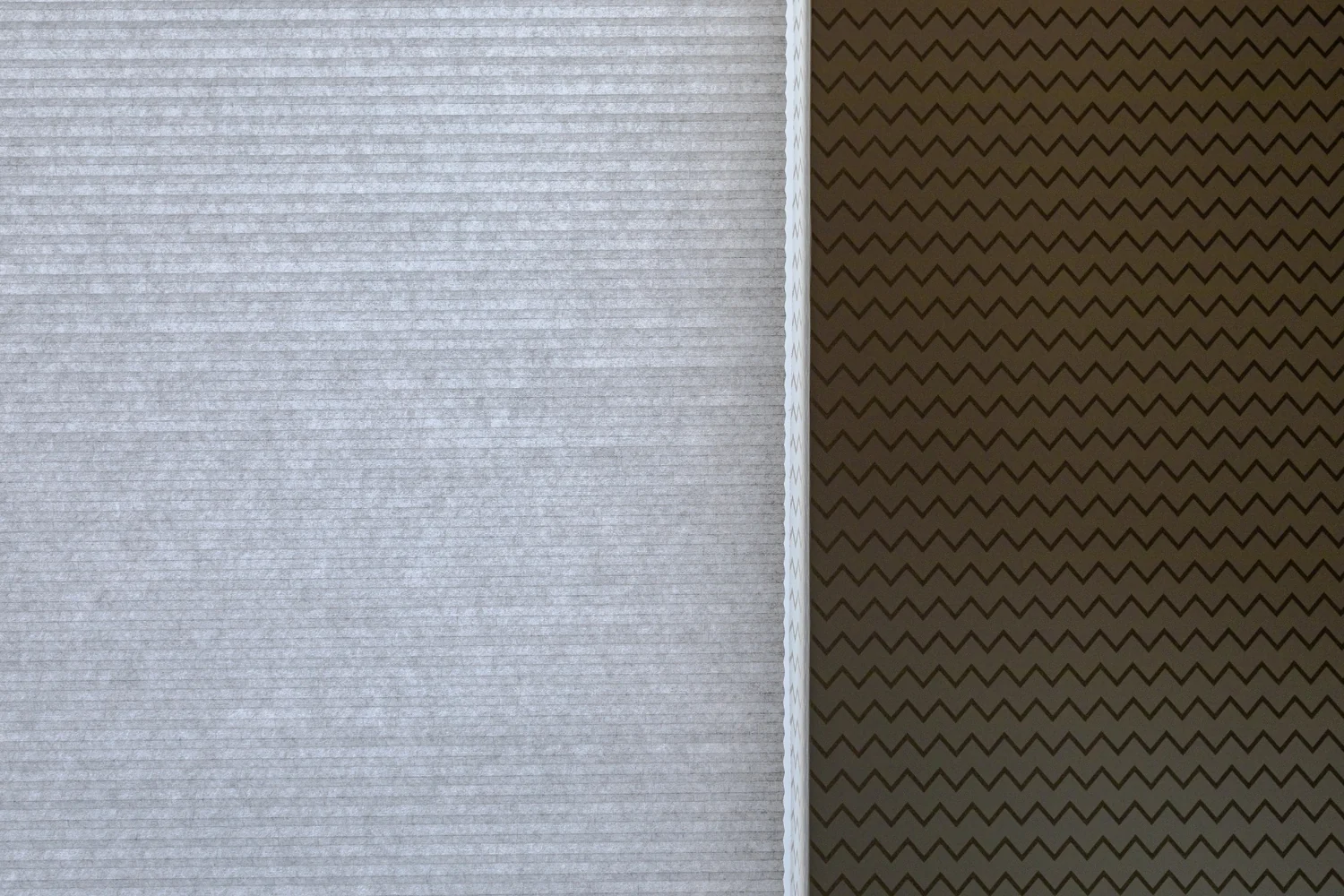
Available configurations vary, so the best route is to assess the actual window or door before choosing the operating system.
Explore Perfect Fit →The images are deliberately taken from different projects so the page shows the range of cellular blinds without repeatedly showing the same windows.
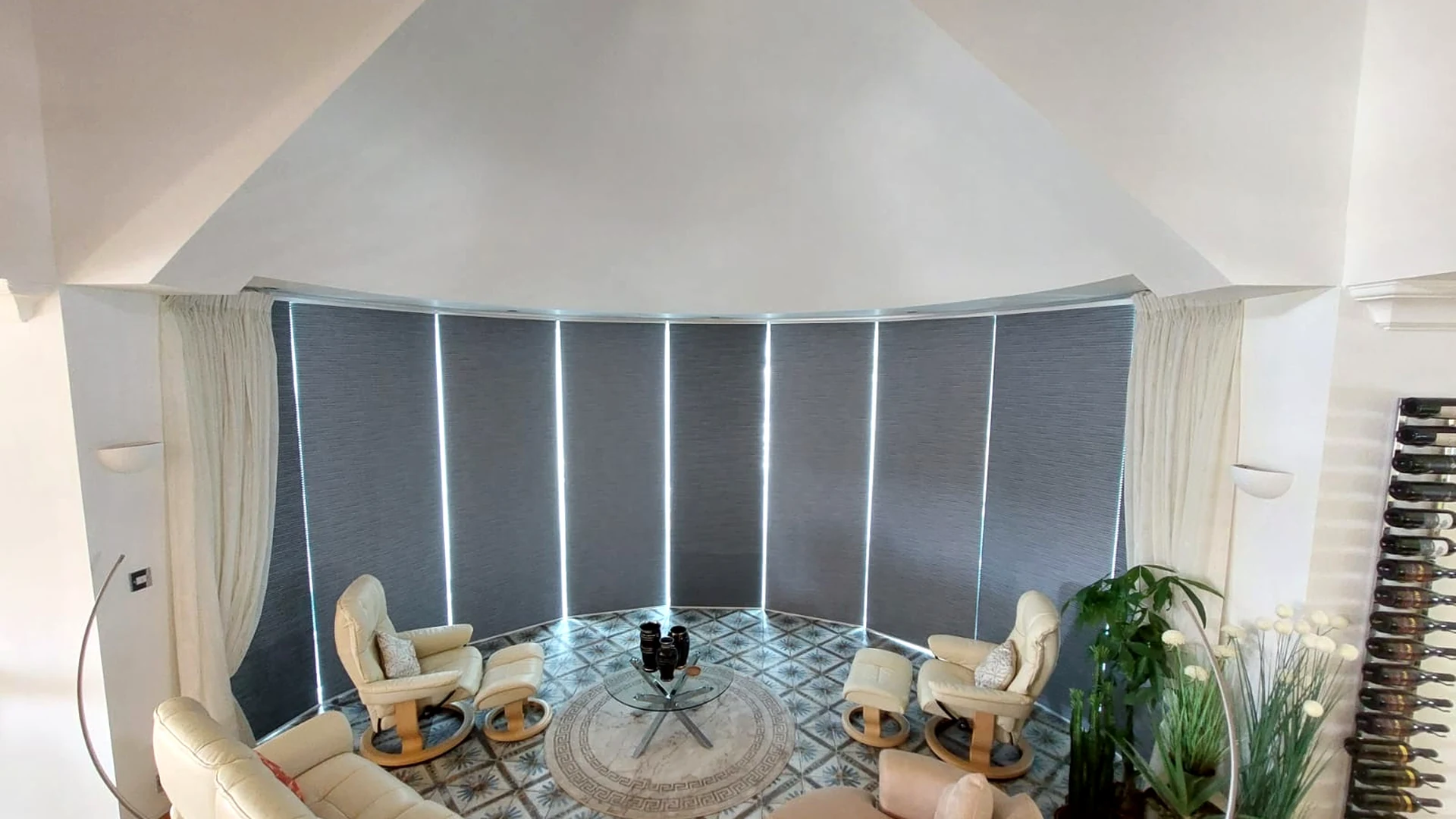
Browse more real installations before deciding which blind suits your room.
View the Installation Gallery →
The video shows cellular blinds in a real setting rather than as a fabric swatch. You can see the scale, the pleated surface and how the product sits with contemporary glazing.
You do not need to decide the exact fabric or operating system before booking. That is what the home appointment is for.
Arrange a free home appointment and tell us roughly what you are considering.
Look at cellular fabrics, light-control levels and suitable operating options in the room.
We professionally measure the relevant windows and confirm the appropriate fitting arrangement.
Your blinds are made to specification and professionally installed by our fitting team.
Cellular blinds can be straightforward on a standard window and highly technical on larger or specialist glazing. Our role is to narrow the right specification before the blind is made.
Made-to-measure blinds produced by our own local team.
We assess frame depth, opening method, glazing and the room itself.
Our fitting team installs and tests the finished blind in your home.
Our guarantee and aftercare support continue after installation.
Useful answers about honeycomb blinds, light control, thermal performance and specialist applications.
Book a free home appointment. We’ll compare suitable options, professionally measure the glazing and provide a quotation.
