




01
Can a child reach a cord or chain?
Look for loose cords, chains or loops around every blind, including what might become reachable from nearby furniture.
Babies and young children climb, explore and grab things without recognising danger. Find out what to check around your windows, take a quick home safety check or help children learn to spot a potential danger themselves.

The most useful question isn't simply “does this blind have a cord?” It is “could a young child reach it — now, or by climbing on something nearby?”
Choose the check that best matches your situation. Each one focuses on practical things you can look at around your own windows.
Check the rooms your baby will use before little hands start exploring. We'll help you look at blinds, cords, chains and nearby furniture room by room.
Check blinds already fitted before you decide where beds, sofas, chairs and other furniture will permanently sit.
Six quick questions can highlight something around your windows that may be worth checking more closely.
Roo is small, quick and grabs everything. Can you spot the things that need a grown-up's attention before Roo reaches them?
Follow the clues, solve five safety cases and work out what could put a younger child at risk around a window.
You don't need to understand technical standards to make a useful first check around your home.
Look for loose cords, chains or loops around every blind, including what might become reachable from nearby furniture.
Check beds, cots, sofas, chairs, tables, toy storage, highchairs and other furniture around the window.
If a fitted safety device is missing, damaged or no longer working as intended, don't improvise a repair. Get the correct advice.
Young children climb, stretch and pull things adults may barely notice. A blind cord that appears out of reach can become accessible if furniture provides a route towards it.
Where possible, start with an operating system that avoids leaving a loose cord or chain for a young child to reach. BBSA describes this approach as “safe by design”.
Some blind systems can operate without an accessible loose cord or chain.
Motorisation can remove the normal need for a manual operating cord or chain and can be useful in family spaces and children's rooms.
Other systems can conceal cords or keep them permanently tensioned instead of leaving a loose accessible loop.
Older blinds and blinds that have been altered, moved or damaged may deserve a closer look. Don't rely on age alone — check what a child can actually reach and whether the fitted safety system is still working as intended.
Some blinds use cords or chains together with a specific child-safety system. Where one is required, it should remain correctly fitted and be used as intended.

Some operating chains use connectors designed to separate under the required load, helping prevent the chain from remaining as a continuous hazardous loop.

Some blinds keep the operating cord or chain correctly tensioned against the adjoining surface instead of allowing it to hang as a loose accessible loop.
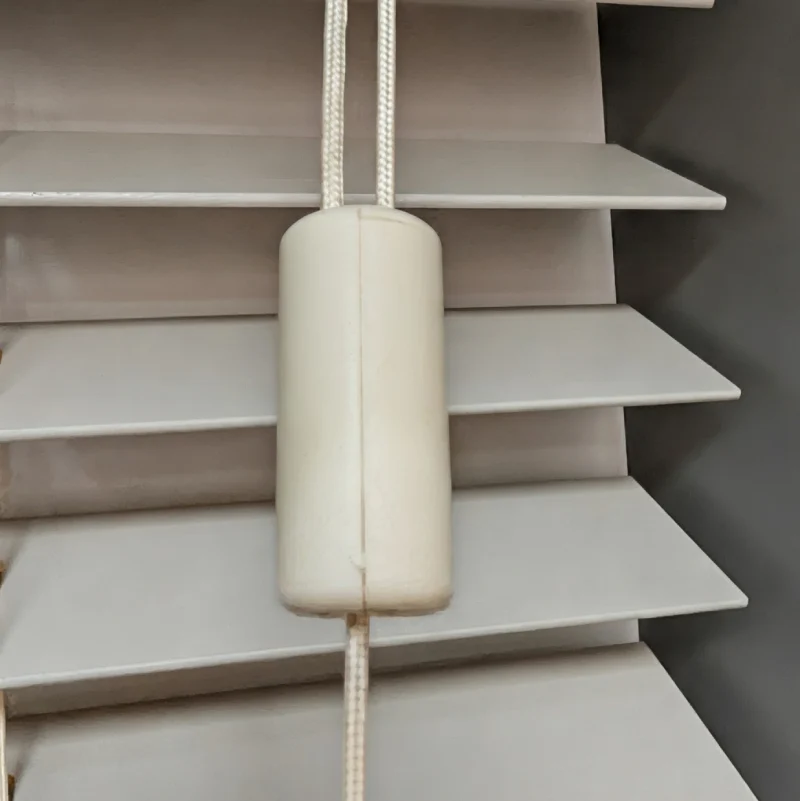
Where a blind uses loose operating cord, the correct accumulation device can keep the cord securely stored after use and out of the reach of young children.
Our tools are designed to make the subject easier to understand. These organisations provide the detailed child-safety and regulatory information behind the advice.
Not automatically. Some blind systems use cords or chains together with appropriate child-safety measures. Where possible, BBSA recommends considering safe-by-design options first where young children live or visit.
Keep babies and young children away from it, remove any climbable furniture that provides access and seek advice on the appropriate safety solution. Do not tie cords together or improvise a fix that could create another loop.
Yes. Blind safety matters anywhere babies and young children spend time, not only in their own home. That can include relatives' homes, childminders and other places they regularly visit.
They can be. Motorisation can remove the normal need for an accessible manual operating cord or chain. Suitability depends on the blind, window and chosen motor system.
No. Where a safety device forms part of the safe installation, it should remain in place and be used as intended. If it becomes damaged or inconvenient, seek advice rather than altering it.
No. However, older blinds may pre-date the child-safety requirements introduced in 2014 and may not have the features expected on newer installations. They are worth checking rather than judging them by age alone.
These references support the child-safety guidance on this page and are included for anyone who needs the technical detail.
During a free home appointment we'll measure your windows, look at how each room is used and help you compare suitable blind and operating options before providing your quotation.