


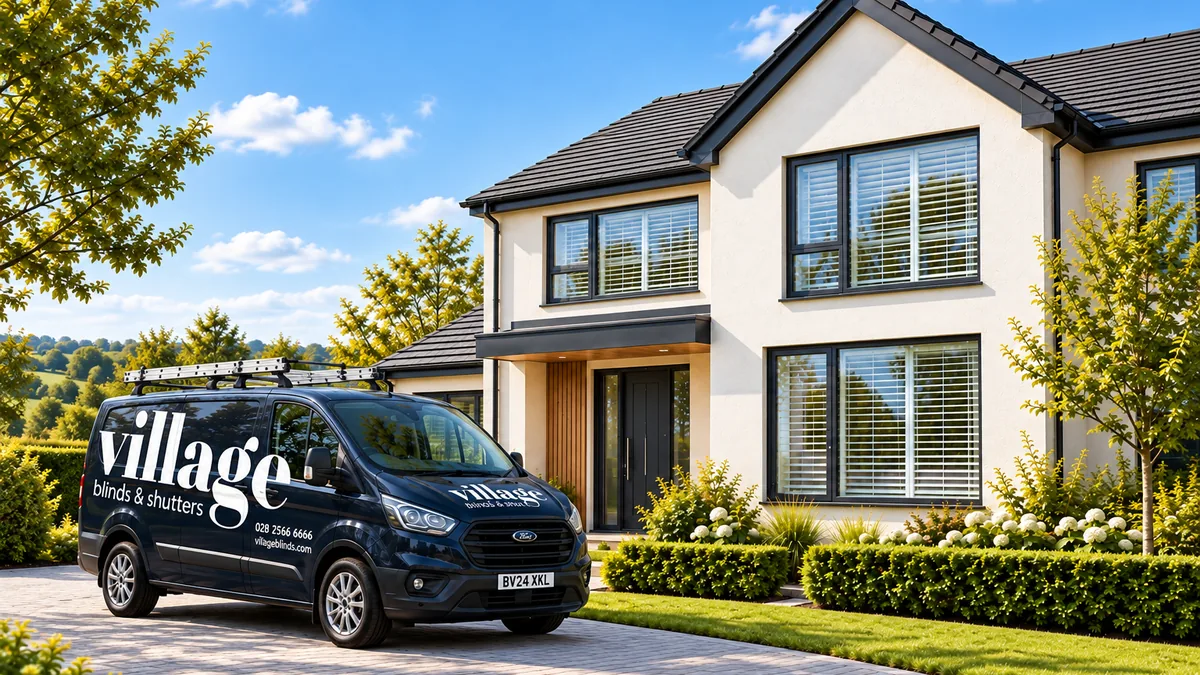

Pure White
Clean and crisp where the room already has strong whites and a brighter overall finish.
Useful direction — confirm against the real sample.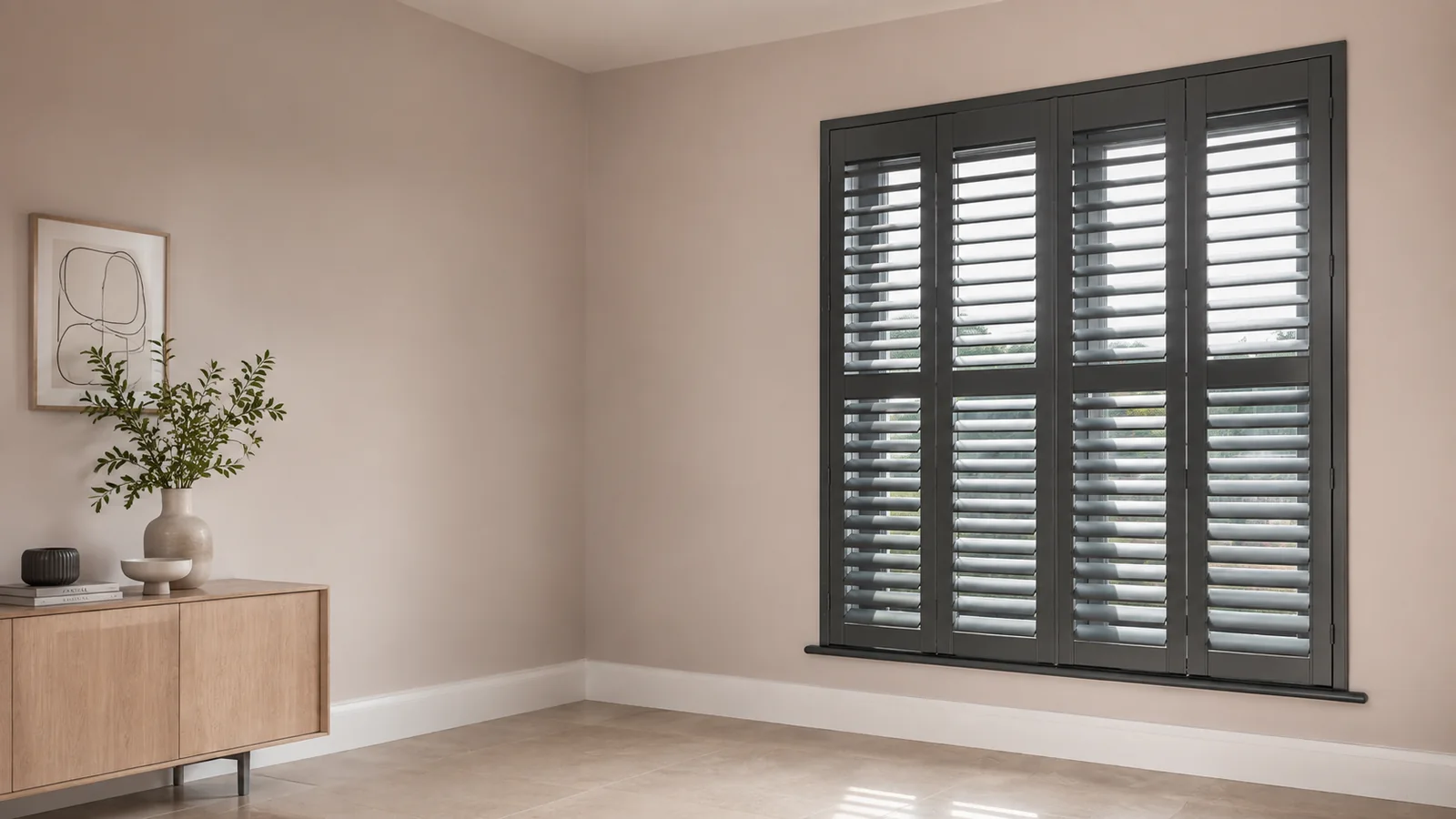
White is only one direction. Choose a finish that sits naturally with your walls and joinery, softens the scheme or creates deliberate contrast — then confirm the final colour from real samples in your own room.
The installation image shows Anthracite. Use the swatches to compare colour directions; final colour and availability are confirmed from physical samples in your own room.
White remains a classic choice, but it is not the only way to make shutters feel settled in a room. The right finish can recede quietly, connect with joinery and flooring, or create a stronger architectural feature.
Daylight, wall tone, flooring and the size of the window all change how a finish reads, which is why the physical sample is most useful when it is beside the surfaces it needs to live with.
These are useful colour directions rather than a promise of a fixed product palette. All our shutters come in a standard classic white colour. We bring the current physical samples and confirm what optional colours are available for your shutter specification.
Clean and crisp where the room already has strong whites and a brighter overall finish.
Useful direction — confirm against the real sample.Less stark against warm paint, cream joinery, softer cabinetry and warmer interiors.
Useful direction — confirm against the real sample.A warmer direction for rooms with natural timber, cream tones and warmer flooring.
Useful direction — confirm against the real sample.Useful when you want definition around the window without the visual weight of a dark finish.
Useful direction — confirm against the real sample.A muted neutral that can sit comfortably with greens, stone, natural textures and softer schemes.
Useful direction — confirm against the real sample.Strong contrast for contemporary rooms, darker joinery and windows you want to frame deliberately.
Shown in the main hero installation.Use the colour to support the room rather than treating the window as a separate decision. These examples show how lighter, darker and more muted finishes change the overall feel.
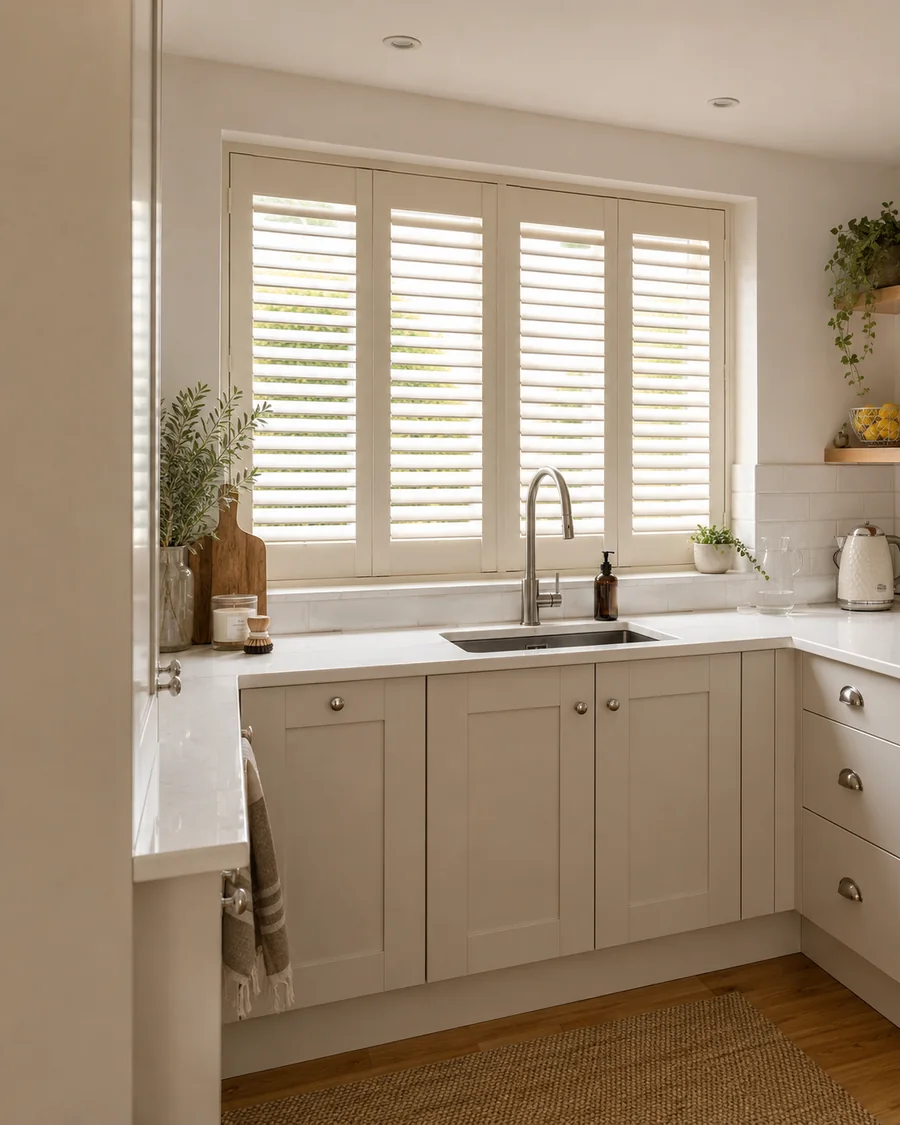
A warmer white can feel more settled beside cream cabinetry and natural materials.
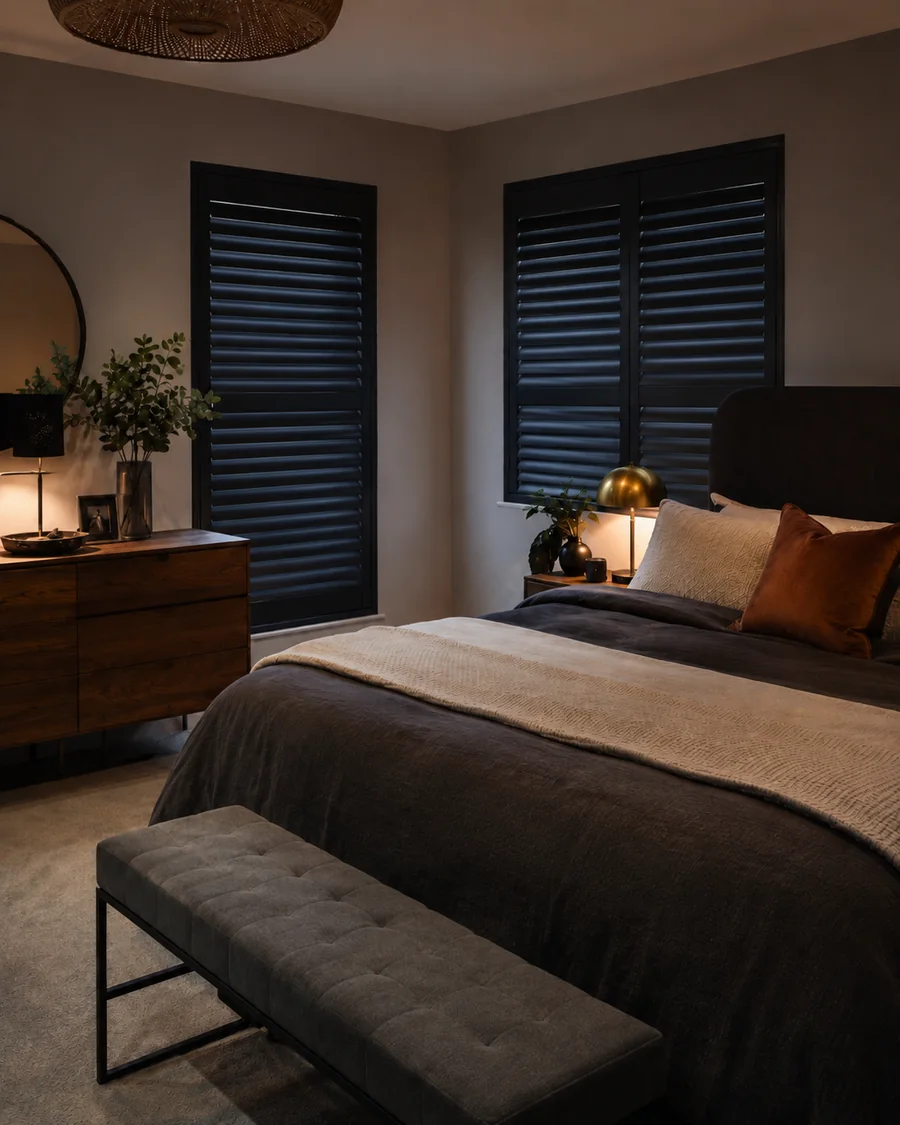
A deeper finish can work beautifully with dark furniture, layered lighting and warmer textiles.
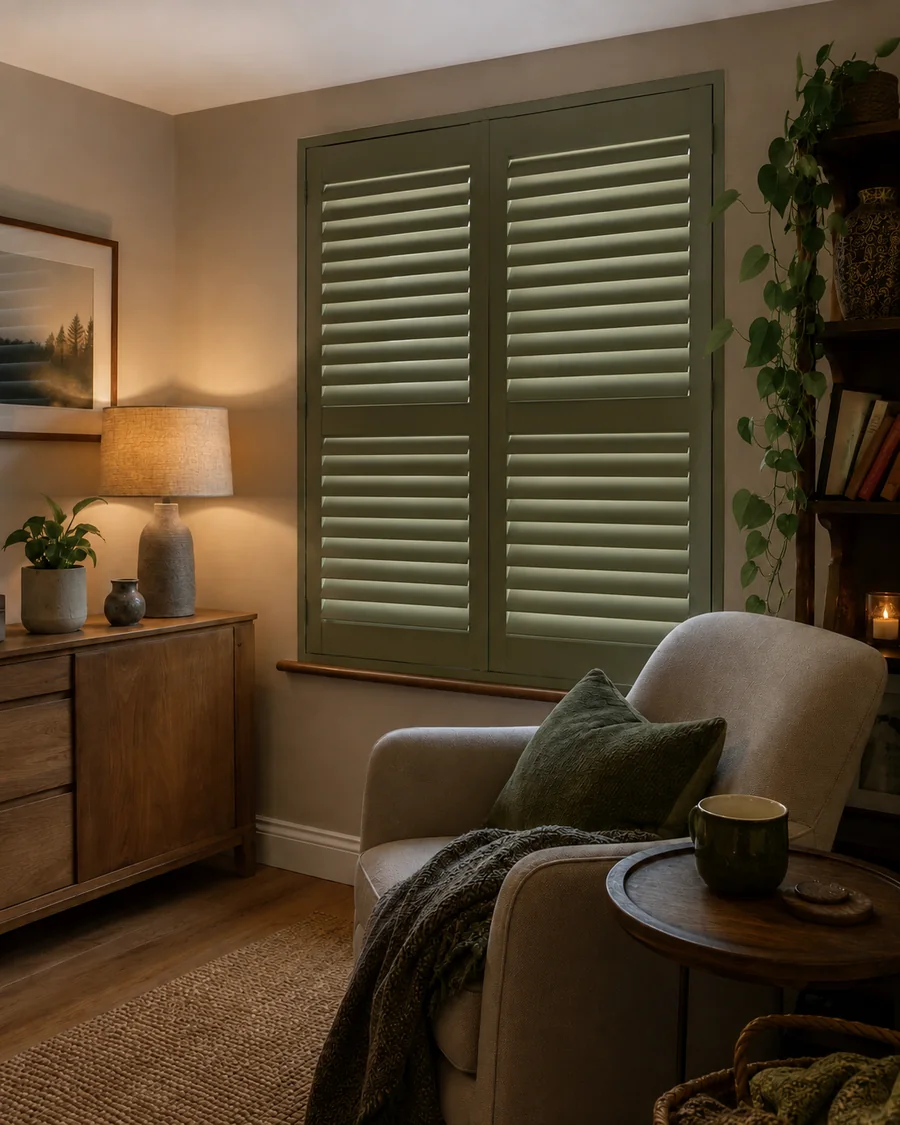
A muted olive direction can make the shutter feel part of a warmer, more layered room.
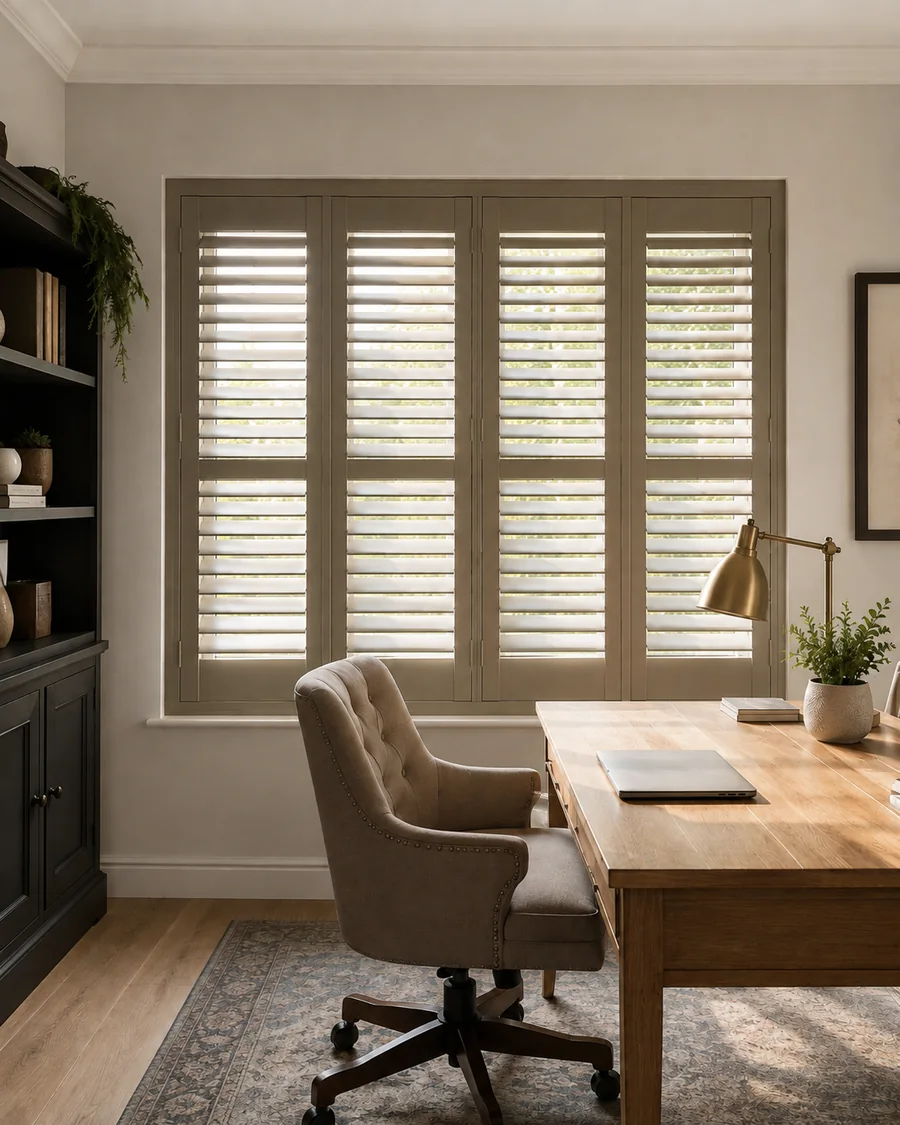
Warm grey frames the glazing while keeping the room calm and usable.
The colour changes the character of the shutter, not the basic way you use it. Tilt the louvres wider for more daylight, angle them for softer light and privacy, or open the panels when you want the glazing more fully exposed.
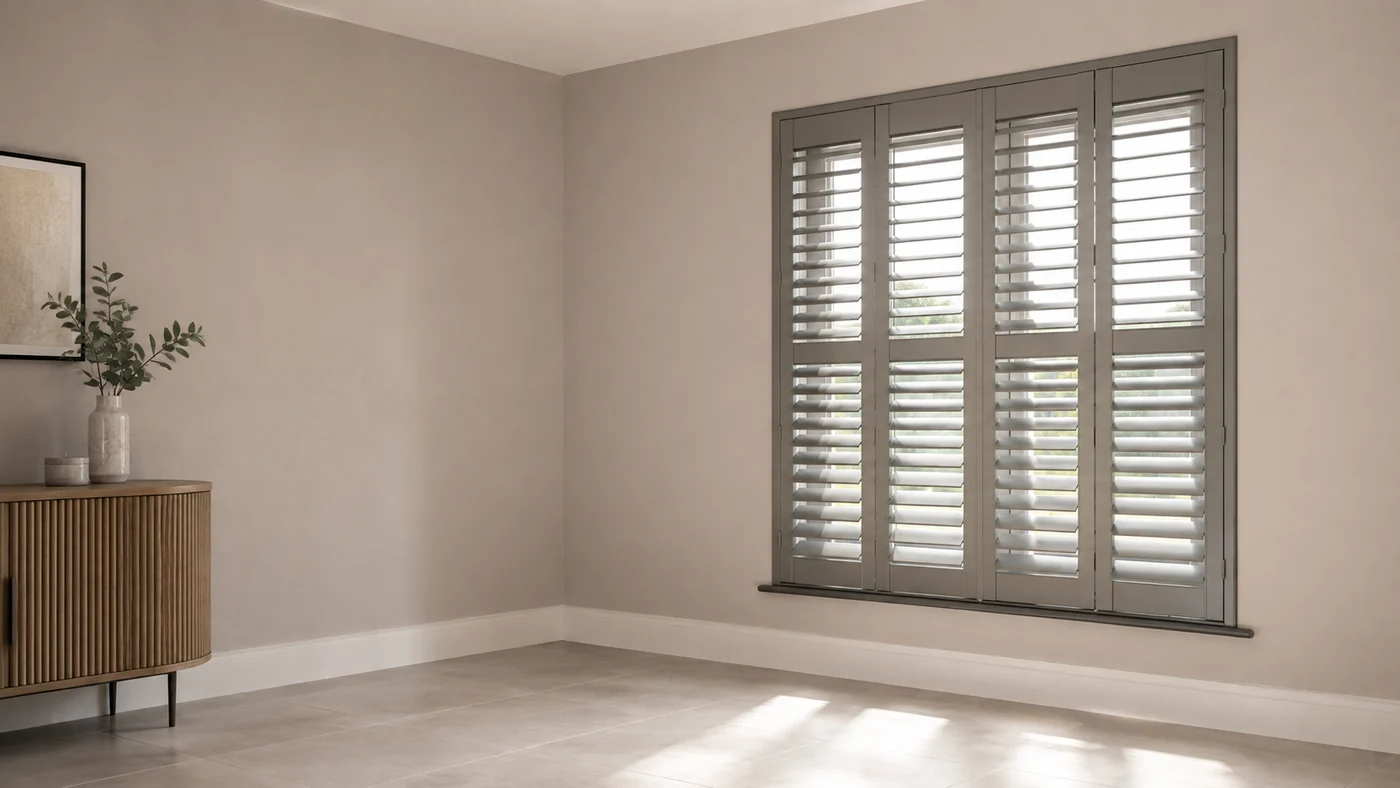
A colour that looks right on a screen can read differently beside your actual walls, floors and furniture. The room itself is the best reference.
Decide whether the shutter should blend in, sit one step darker or create deliberate contrast.
Look at skirting, architraves, window frames and cabinetry rather than matching the wall alone.
Timber, stone, upholstery and metal finishes all influence whether a warmer or cooler neutral feels right.
North-facing and bright south-facing rooms can make the same physical sample feel noticeably different.
Watch the supplied short to see how the shutter finish sits with the walls, furniture, daylight and the proportions of the room.
Use the Shutter Visualiser for an illustrative first look at the overall colour direction, then compare the real physical samples in your room before the final specification is agreed.
Visualiser images are illustrative. Final colour, layout and specification are confirmed after measuring.
Panel layout, louvre size, window shape and opening style still matter. Compare the main shutter styles and details alongside colour.
For a continuous shutter treatment covering the complete window opening.
Compare Full Height →For privacy across the lower window while the upper glazing stays open to daylight.
Compare Café Style →For full-window coverage with separately opening upper and lower shutter tiers.
Compare Tier-on-Tier →For arches, apexes, circles and unusual openings where the shutter follows the geometry.
Explore Shaped Shutters →Read current feedback about made-to-measure shutters, professional fitting and the overall experience with Village Blinds and Shutters.
The exact finish is confirmed from the current physical samples available for the shutter specification you choose.
We’ll compare physical shutter samples against your walls, floors, joinery and daylight, then help you narrow the colour direction alongside louvre size, panel layout and tilt. We’ll professionally measure and provide a quotation for the specification you choose.
Choose the time window that suits you best. You’ll continue to the live calendar to choose an available date.
You do not need to know the final colour, louvre size, panel layout or tilt option before you book.
Book a free home appointment and we’ll measure your windows, bring suitable samples and help you compare the options in the room where the shutters will live.
Explore all plantation shutter styles, planning tools and real installations.
Explore Plantation Shutters → Or call 0800 059 0747